Choosing the right Kitchen Cabinet Materials shapes how your kitchen looks, performs, and lasts. The material behind your cabinet boxes and every cabinet door affects durability, cost, and finish. Solid wood, MDF, and plywood each bring different strengths. Some show rich wood grain. Some hold paint without a flaw. Some resist moisture better than natural wood.
This guide from The Cabinet Mill compares the best kitchen cabinet materials so you can match each one to the right part of your kitchen.
Why Your Cabinet Material Choice Matters
Your cabinets are used daily and often. Doors open and close thousands of times a year. Boxes carry the weight of dishes, small appliances, and countertops. Steam and splashes near the sink test every surface. The right cabinet material decides whether your cabinets stay square, resist swelling, and keep their finish over time.
Cost also follows the material. Solid wood sits at the premium end. Plywood lands in the middle. MDF gives you the most affordable smooth surface for paint. A smart kitchen design mixes materials to balance strength, look, and budget. Before any kitchen renovation, weigh the pros and cons of each option so you spend where it counts.
Material choice also affects resale value. In the Windsor-Essex market, buyers notice a kitchen that feels solid and well finished. Cabinets built from the right materials signal quality and protect the money you put into the room.
The Three Main Kitchen Cabinet Materials
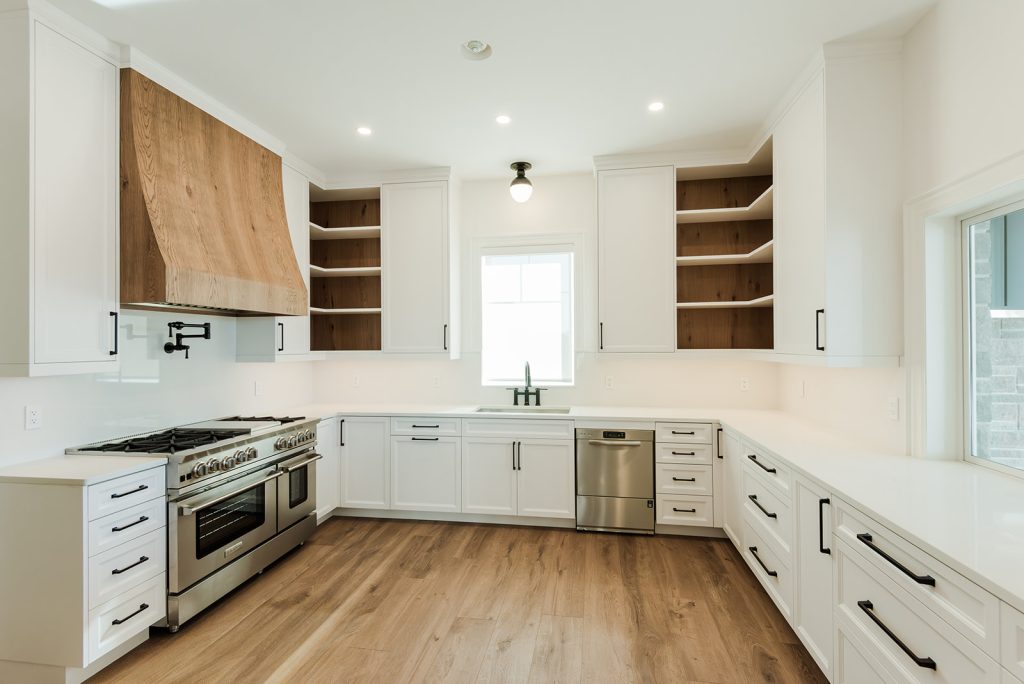
Cabinets are made from two broad groups: solid wood and engineered wood options. All three main options start as wood in some form, yet each ages differently. The sections below compare plywood, MDF, and solid wood on strength, finish, and price. Each wood product has clear pros and cons.
Plywood: Strength for Cabinet Boxes
Builders make plywood by layering thin sheets of wood veneer and gluing them together. These thin layers of wood run in alternating directions, which gives a plywood cabinet high strength and stability. The cross-grain build resists warping and grips screws well.
High-quality plywood handles moisture better than most engineered woods. That makes it the top pick for plywood cabinet boxes near sinks and dishwashers. Builders often choose plywood for the box shell because it carries heavy loads without sagging. Plywood is used for cabinet boxes more than any other structural material.
The trade-offs are cost and edges. A plywood cabinet costs more than particleboard or MDF. Its raw edges show the layers of wood veneer, so they need edge banding for a clean look.
MDF: A Smooth Painted Finish
MDF is an engineered wood product made from wood fibers and resin, pressed into dense sheets. Makers combine these compressed wood fibers with wax to form a flat, even panel. Because MDF is made from compressed wood, it has no knots or natural grain. The surface of MDF is smooth, so it takes paint cleanly.
MDF cabinets stay stable through temperature and humidity swings. They will not crack or warp the way solid wood can, which keeps painted cabinet doors looking sharp for years. For doors and drawer fronts, MDF cabinets often beat wood on finish quality.
The main weakness is water. If the finish on MDF cabinets gets chipped, the core can swell where standing water sits. Keep the finish intact, though, and MDF holds up well through normal use.
Solid Wood: Natural Beauty and Stain
Solid wood comes straight from lumber, with no fillers. Solid wood offers natural beauty and real wood grain that no engineered panel fully copies. Each wood species, such as oak, maple, or walnut, brings its own natural wood grain and color. If you want a stained finish, this type of wood delivers it.
High-quality solid wood also brings strength and a premium feel. Solid wood doors, face frames, and details gain warmth from real lumber. A solid wood kitchen reads as timeless.
The catch is movement and cost. Solid hardwood expands and contracts with humidity, so it can shift or warp between seasons. Solid wood cabinets also carry the highest price of the three.
A Quick Word on Particleboard
You will also see particleboard in many stock and budget cabinet lines. Particleboard combines wood chips and resin, pressed into flat sheets. It is the cheapest engineered option and works fine for low-moisture cabinets and simple shelving. Its weakness shows with water and weight. Particleboard swells fast if it gets wet, and it does not hold screws as well as plywood. For a kitchen you plan to keep for decades, plywood and MDF are the stronger long-term picks.
The Best Hybrid Approach
You do not have to pick one material for the whole kitchen. Many kitchen designers pair solid wood and MDF with plywood in the same project. This approach gives you strength, a clean finish, and controlled cost.
A proven combination looks like this:
- Plywood boxes: Use plywood for the cabinet boxes and structural parts. It carries weight and resists moisture.
- MDF doors: Use MDF for the doors and drawer fronts to get a smooth, warp-free painted surface.
- Solid wood accents: Add solid wood where stained grain or premium detail matters most.
Plywood or MDF can form the boxes, while MDF gives the doors a smooth painted finish. Whether you choose MDF or plywood for the shell, the result stays solid for years. This is how The Cabinet Mill serves Windsor-Essex Ontario, and builds custom kitchen cabinets that last.
How to Choose the Right Material for Your Kitchen
Match the material to the job. When choosing between solid wood, MDF, and plywood, start with location and finish. A few simple rules make the decision clear:
- Pick plywood or solid wood for strength in cabinet boxes and frames.
- Choose MDF for doors when you want a painted finish with no grain.
- Pick solid wood when you want natural grain and a stained look.
When you compare MDF vs plywood for boxes, plywood wins on moisture resistance. MDF is not as durable as solid wood under impact, but it holds paint better. In a busy kitchen or bathroom, moisture decides a lot. The same rules apply across the kitchen and bathroom, since vanities face water too.
Questions to Ask Before You Decide
A few questions point you to the right material fast:
- Will this cabinet sit near a sink, dishwasher, or another water source?
- Do you want a painted finish or a natural stained look?
- How much weight will the boxes and shelves carry every day?
- What is your budget for the visible fronts versus the hidden boxes?
If you are renovating a kitchen on a budget, plywood boxes with MDF fronts stretch your dollars. MDF is a popular cabinet choice for painted fronts because it is affordable and smooth. A custom cabinet maker can walk you through the trade-offs for your exact layout.
Build a Kitchen That Lasts With The Cabinet Mill
The right Kitchen Cabinet Materials turn a good kitchen into one that works hard and looks beautiful for decades. Since 1988, The Cabinet Mill has helped homeowners across Essex and Windsor-Essex County choose materials that fit their space, their finish, and their budget. Jake and Dale Teigrob build every millwork project with the honesty and craftsmanship of a family business that stands behind its work. Ready to plan your custom kitchen?
Call The Cabinet Mill at (519) 325-0860 to book your design consultation and see how the right materials bring your vision to life.